The Merneptah Stele: Israel’s Earliest Extra-Biblical Mention
The Merneptah Stele (also known as the Israel Stele) is one of the most important archaeological discoveries affirming the ancient Jewish connection to the Land of Israel. It contains the earliest undisputed extra-biblical reference to “Israel” anywhere in the world, dating to approximately 1208 BCE — over 3,200 years ago.
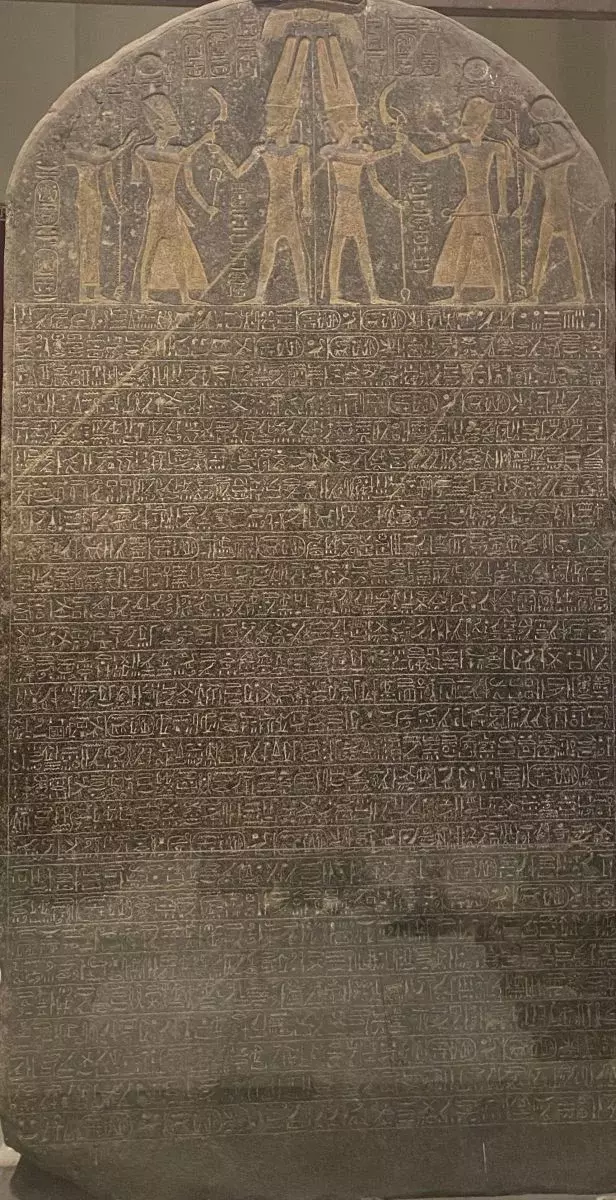
What Is the Merneptah Stele?
Date: Inscribed during the reign of Pharaoh Merneptah (c. 1213–1203 BCE).
Discovery: Found in 1896 in the ruins of Merneptah’s mortuary temple at Thebes, Egypt.
Description: A large granite victory monument that primarily celebrates Egyptian military successes. The final lines describe a campaign in Israel, formerly Canaan.
The Key Inscription
The crucial passage reads: “Canaan is captive with all woe. Ashkelon is conquered, Gezer seized, Yanoam made nonexistent; Israel is laid waste, his seed is no more. Khor (Canaan) is become a widow for Egypt.”
Why This Is So Significant
The Earliest Historical Anchor: This inscription proves that a people called “Israel” already existed and was recognized by one of the greatest powers of the ancient world (Egypt) in the late 13th century BCE. It firmly places Israel as an established presence in the land of Canaan at a very early date.
Israel as a People: Egyptian scribes used a special hieroglyphic symbol (a “people” determinative) for Israel, unlike the symbols used for cities. This shows they viewed Israel as a distinct people or tribal society — exactly as described in the biblical Period of the Judges.
Addressing the “Laid Waste” Claim: Like all ancient royal victory inscriptions, the Merneptah Stele uses exaggerated propaganda language. Egyptian pharaohs routinely boasted of total destruction and complete victory, even when the reality was a limited military success. The claim that “Israel is laid waste, his seed is no more” was typical pharaonic hyperbole. In truth, Israel was not wiped out. The people continued to thrive, develop their national identity, establish the monarchy, build the Temple, and maintain a continuous dominant presence in the land for the next 1,200+ years. The Jewish people today are the direct descendants of this ancient Israel.
Relevance to Jewish Indigenous Identity
The Merneptah Stele serves as independent historical evidence that the ancestors of the Jewish people were already living as a recognizable nation in the Land of Israel over 3,200 years ago. This long predates Christianity, Islam, the Arab conquests, and any modern political claims. It demonstrates that the Jewish connection to the land is deeply indigenous and historically continuous — not a modern colonial invention — and stands as one of the earliest entries in the broader archaeological record of that connection.