The San Remo Conference (1920)
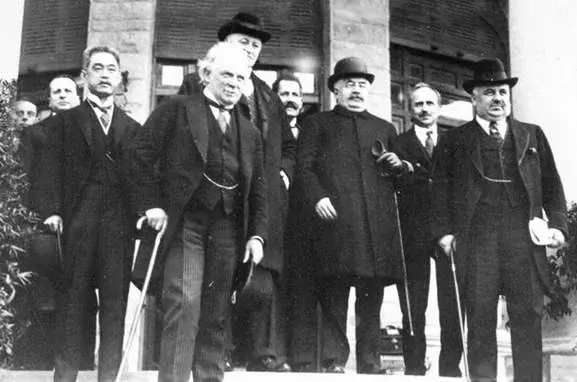
The San Remo Conference was a meeting of the Allied Supreme Council — the leaders of Britain, France, Italy, and Japan, with the United States attending as an observer — held in San Remo, Italy, in April 1920, to divide up the former territories of the defeated Ottoman Empire in the aftermath of World War I.
Recognizing the Jewish National Home
On April 25, 1920, the conference formally adopted the terms of the British Mandate for Palestine, incorporating in full the 1917 Balfour Declaration's commitment to "the establishment in Palestine of a national home for the Jewish people." This was a decision by the international community of the day — not by Jews acting alone — explicitly recognizing the historical connection of the Jewish people to the Land of Israel and endorsing the reconstitution of Jewish national life there. The decision was subsequently ratified by the League of Nations in 1922, embedding it in binding international law.
Why This Matters
Critics of Israel's founding sometimes frame the Jewish return to the land as a unilateral act imposed on an unwilling international community. The San Remo Conference shows otherwise: the leading powers of the post-war world, having just redrawn the map of the entire Middle East, deliberately singled out the Land of Israel for recognition of a specific people's historical and national claim — a recognition rooted in the evidentiary, from the Bible and archaeology to three thousand seven hundred years of continuous presence and unbroken longing for return. As with the Balfour Declaration before it, San Remo did not create the Jewish people's right to their homeland; it formally acknowledged a right the historical record already established, and set the diplomatic foundation on which the modern State of Israel was later built.