Ancient Jewish Coins
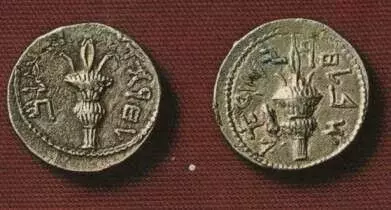
Few artifacts state their political message as directly as a coin. Coins are minted by governments to circulate as an assertion of sovereignty and identity, which is exactly why the thousands of ancient Jewish coins recovered across Israel form such powerful, self-declaring evidence of successive periods of independent Jewish rule.
Three Declarations of Independence, in Metal
Coins from the Hasmonean dynasty (2nd–1st centuries BCE), inscribed in Hebrew with the names and titles of Hasmonean rulers, document the first fully independent Jewish state since the Babylonian exile. Silver shekels minted during the First Jewish Revolt against Rome (66–70 CE) bear the explicit inscription "Freedom of Zion," struck even as the rebellion's outcome remained uncertain. And coins from the Bar Kokhba Revolt (132–136 CE) declare "For the Freedom of Israel," frequently decorated with images of the Temple façade and the palm frond used during the Sukkoth festival — a defiant assertion of Jewish religious and national identity struck in the very years Rome was working hardest to erase it.
Why Coins Are Especially Persuasive Evidence
Unlike a later text that might reinterpret or embellish history, a coin is a primary, physical, precisely dated artifact from the moment it was minted — there is no room to argue that "Freedom of Zion" or "For the Freedom of Israel" was added by later copies produced by scribes with an agenda. It was struck in silver and bronze by the political authorities of the time, for immediate circulation, saying exactly what those authorities wanted said. Thousands of these coins, recovered in datable archaeological contexts across the country, place direct, physical, contemporaneous testimony to Jewish political sovereignty at multiple distinct points across more than four centuries — a core pillar of the broader archaeological record.