The Capernaum Synagogue
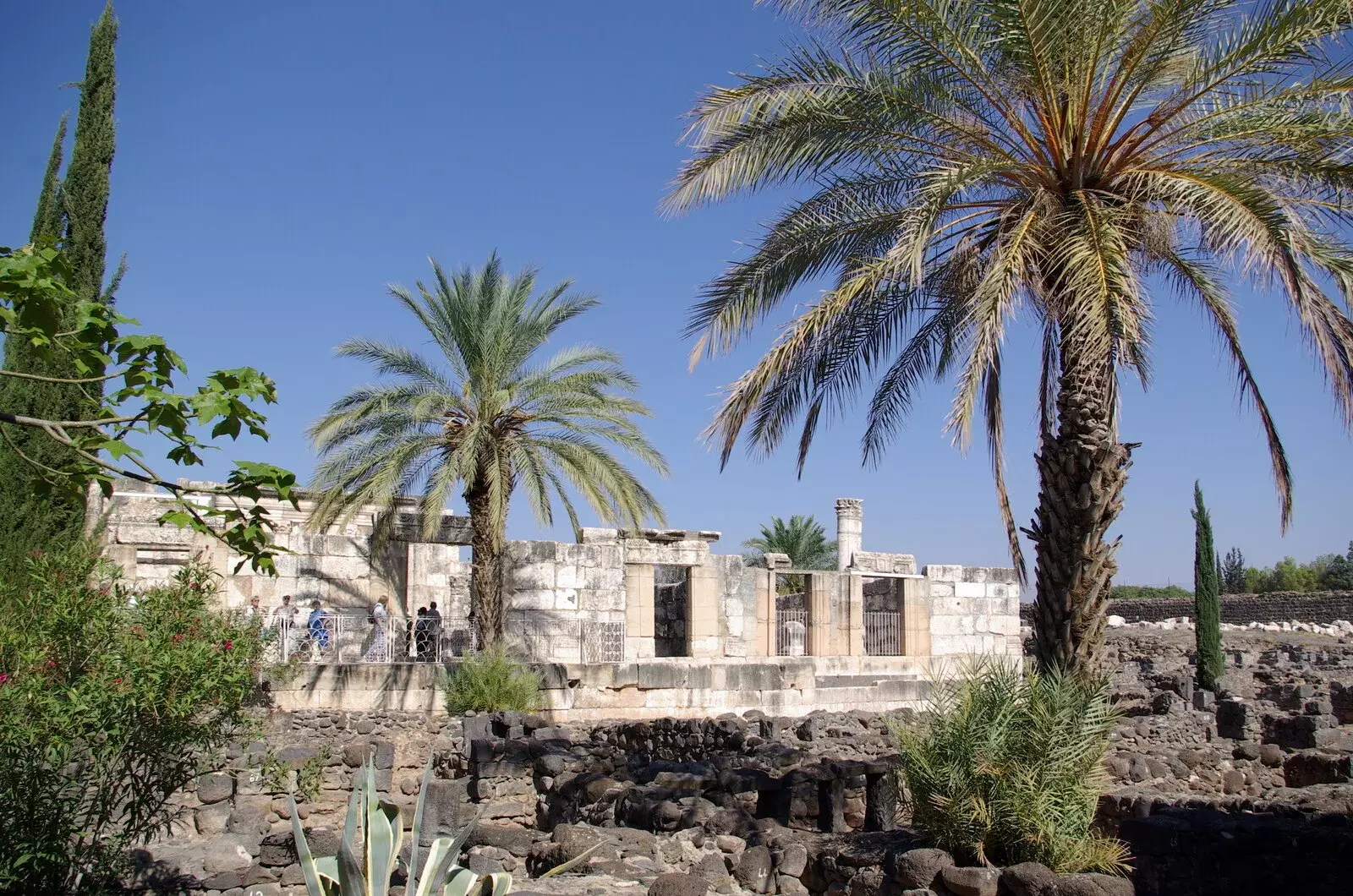
The ruins of an impressive white limestone synagogue stand today on the shore of the Sea of Galilee in Capernaum, one of the most thoroughly excavated Jewish sites in Israel. The visible structure dates to the 4th–5th centuries CE, but excavations beneath its floor uncovered the basalt foundations of an earlier synagogue from the 1st century CE — meaning the site was in continuous Jewish religious use for centuries, with each generation rebuilding on the same ground.
An Ancient Galilean Jewish Community
Capernaum was a thriving Jewish fishing village on the Galilee's northern shore during the Second Temple period, and its later, more elaborate synagogue building reflects the continuing strength of Jewish communal and religious life in the Galilee of Israel for hundreds of years after the destruction of the Temple in Jerusalem in 70 CE — precisely the period some narratives wrongly describe as one of total Jewish absence from the land.
The building's finely carved architectural details — Corinthian-style capitals, decorated friezes, and a raised platform for Torah reading — reflect a prosperous, organized Jewish community capable of investing significant resources in its house of worship. Its excavation, along with that of dozens of other ancient synagogues across the Galilee region, forms part of the broader archaeological record documenting unbroken Jewish religious life in the land for millennia.