The Beit Alpha Synagogue Mosaic
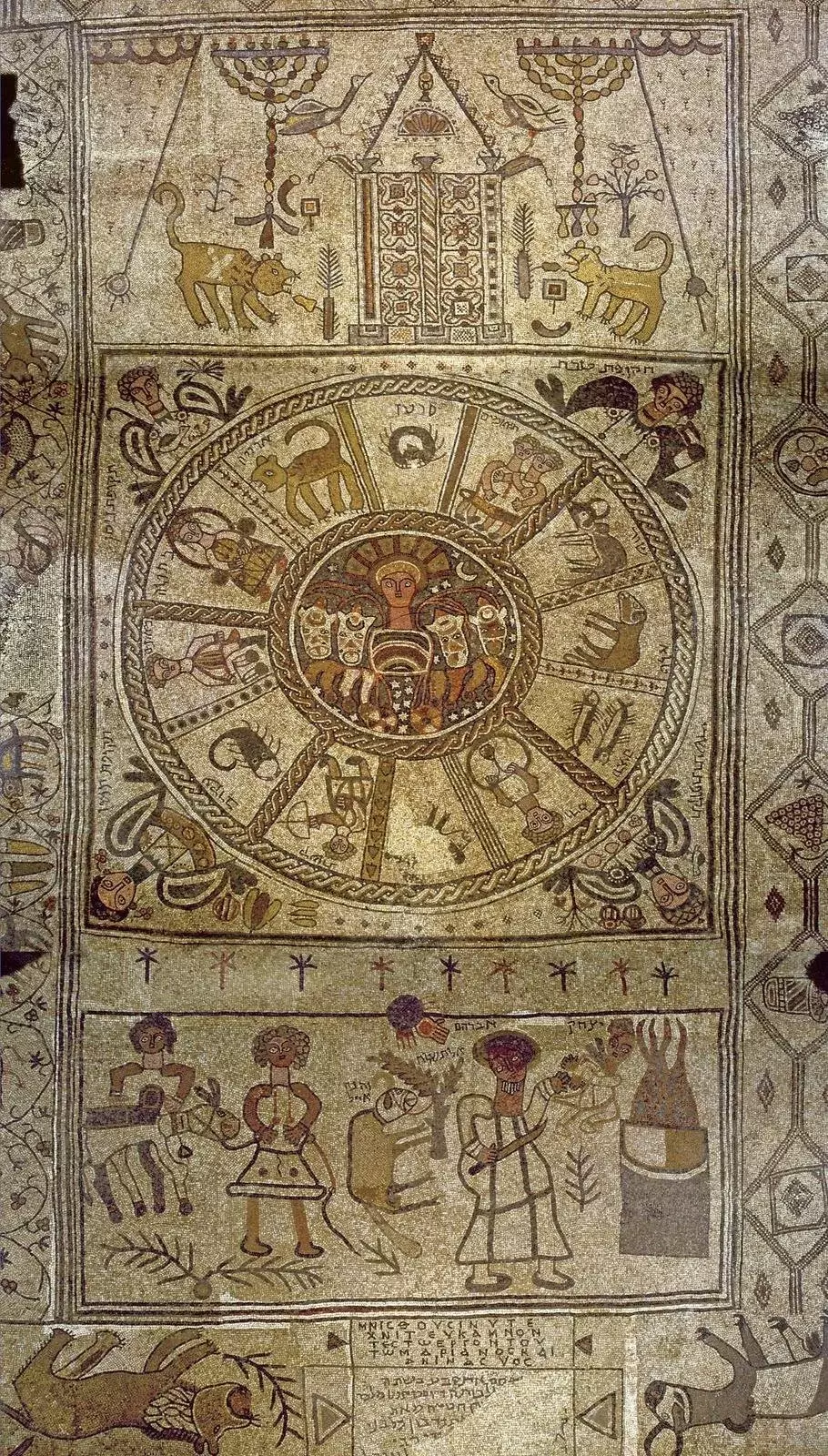
Discovered by chance in 1928 during irrigation work near Beit She'an, the Beit Alpha Synagogue preserves one of the most spectacular ancient mosaic floors ever found in Israel — a vivid, richly colored artwork dated by inscription to the reign of the Byzantine emperor Justin I (518–527 CE).
A Window Into Sixth-Century Jewish Life
The mosaic is divided into three panels: a scene of the binding of Isaac, a striking central wheel of the zodiac with the Greco-Roman sun god Helios at its center surrounded by the twelve Hebrew-labeled zodiac signs and four female figures representing the seasons, and a depiction of the Ark of the Covenant flanked by menorahs, lions, and ritual objects. An Aramaic and Greek dedicatory inscription names the artisans who built it and the community members who funded it.
What makes Beit Alpha so significant as evidence of continuous Jewish civilization is what it reveals about Jewish life centuries after the Roman conquest: an organized, prosperous, artistically sophisticated Jewish community, comfortable enough with its surrounding Greco-Roman culture to incorporate its imagery into a building of explicitly Jewish religious use, actively worshiping and investing in communal religious life in the Land of Israel in the 6th century CE. Together with the synagogues at Capernaum and Huqoq, Beit Alpha is part of a wider pattern documented across the archaeological record: Jewish communal life did not vanish after 70 CE — it persisted, adapted, and in places like this, flourished.